The building
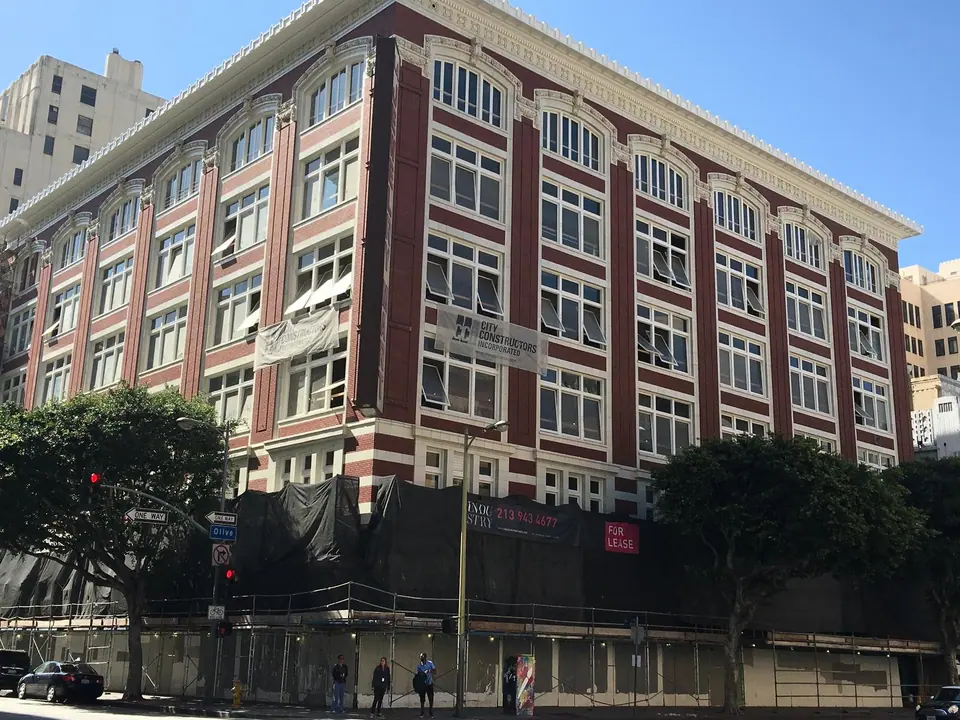
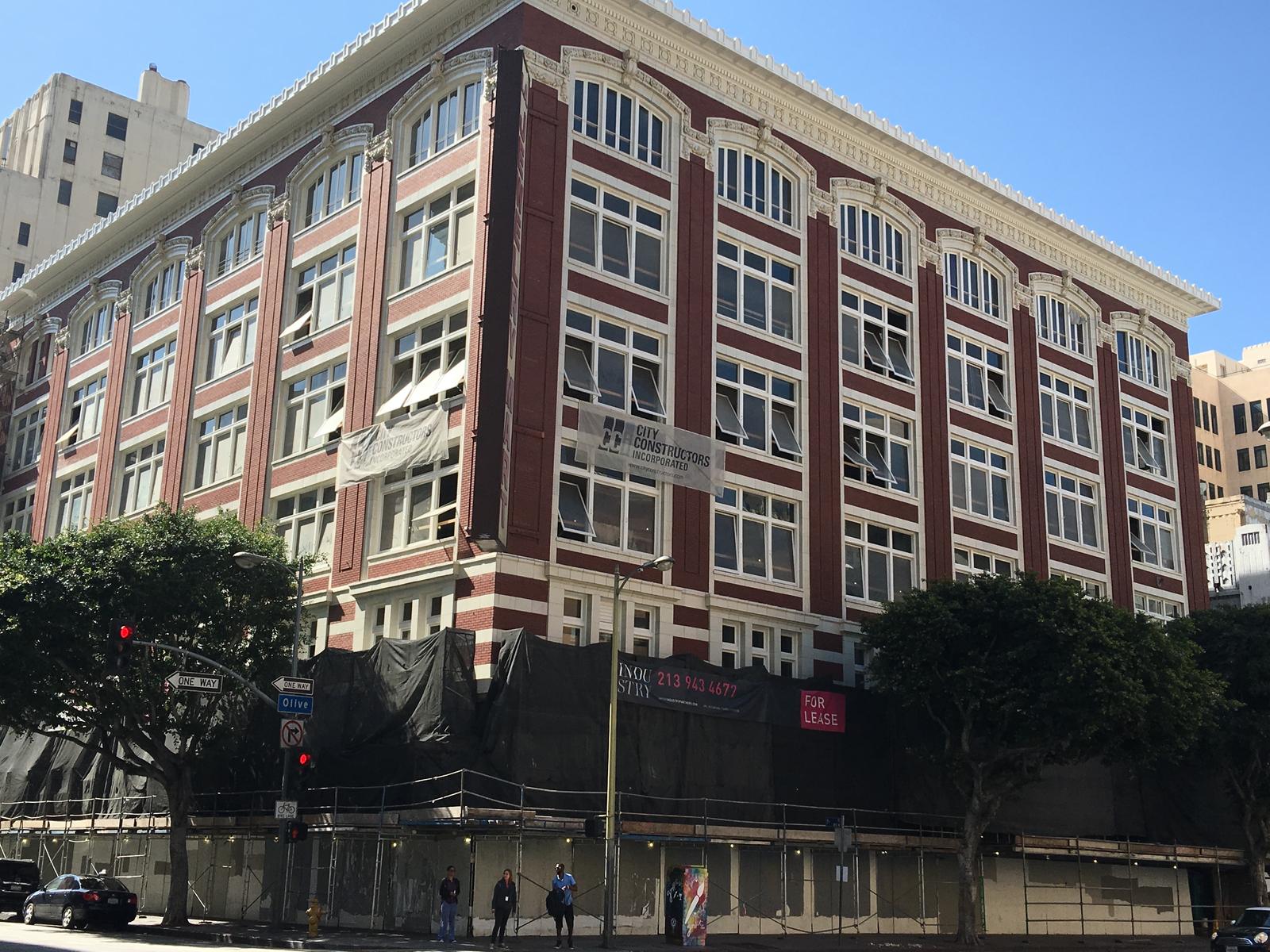
Downtown Los Angeles holds one of the largest surviving concentrations of early twentieth-century commercial architecture in the United States, much of it now converted to offices, hotels and apartments. Our photographs are from one of those buildings.
The hardest retrofit there is
Historic glazing is difficult precisely because everything you would normally do is unavailable. The windows are usually single-glazed, sometimes still with their original glass, in steel or timber frames. Replacing them alters the appearance of a protected elevation and is generally refused. Adding external shading alters it too. Secondary glazing is heavy, expensive and often visible from the street. And the buildings were designed for a working day that finished before air conditioning existed — deep reveals, high ceilings and operable sashes, most of which have long since been sealed shut.
The performance gap is not marginal. A single sheet of clear glass rejects very little: most of the solar energy that lands on it comes straight through. That is why the upper floors of a converted downtown building are hot from the middle of the morning, and why cooling plant retrofitted into shafts that were never intended to carry it spends the afternoon at capacity.
Downtown adds reflected gain on top. Glass towers built alongside these buildings bounce sun into windows at hours when the sun itself is on the opposite elevation, and there is no fixed shading device that anticipates it.
What window film does about it
Film suits historic work for a reason that has nothing to do with performance: it is applied to the inside face of the existing pane, it removes nothing, it replaces nothing, and it is reversible. The film can be taken off and the original glass is as it was. On a building with heritage protection that reversibility is very often the argument that carries the approval.
Reversible is not the same as risk-free, though, and old glass deserves care. It is not modern float glass: it is thinner, less uniform, sometimes already stressed or starred, and occasionally cylinder or drawn glass with visible distortion. A strongly absorbing film raises the temperature difference across a pane, and on glass like that the thermal stress calculation matters more than the datasheet does.
Where the glazing is original we would rather fit a clear, low-absorption ultraviolet film and accept a smaller reduction in heat than put the pane at risk. That protects the interiors, the joinery and the contents from the fading that is doing most of the long-term damage, and it leaves the glass alone.
Where a building has been converted and the glazing on the working floors is modern replacement, there is no such constraint and the full solar specification can be used. Most converted downtown buildings are a mixture of the two, which is why they get surveyed elevation by elevation rather than quoted from a schedule.
We work on historic and converted buildings in Hawaii and California. See our commercial projects or request a quote.
TESTIMONIALS
What People Say

We at the waikiki shopping plaza and waikiki business plaza have used or recommended Ace Glass Tinting on eight (8) different jobs in the last few years. Our jobs ranged from small two windows (36 sq. ft.) to a very difficult...
This letter is to thank you for the great job you did on our windows and doors.
It is so wonderful, we can already tell the difference in temperature...
Thank you very much for your glass tinting services for installation of the Huper Optik 40 ceramic film on our meeting rooms (Rooms 516 & 517). This film has improved the quality of our meeting rooms by reducing the heat....
Ace Tinting tinted Paradise Cruise offices on the 6th and 7th floors of Aloha Tower and on the Star of Honolulu (1500 passenger Dinner Cruise Ship). The tinting significantly reduced heat and glare in the interior spaces....
Get a Free Quote
Need More Information?
Get a free quote
Tell us the glass you want covered and Keith will call you back to arrange a time to measure it.
Residential film from $300
Priced per square foot of glass. No charge
for the estimate.
Prefer to talk? (808) 551-5500, Mon – Sat, 8:30am – 6:00pm. Sunday closed.