
The building
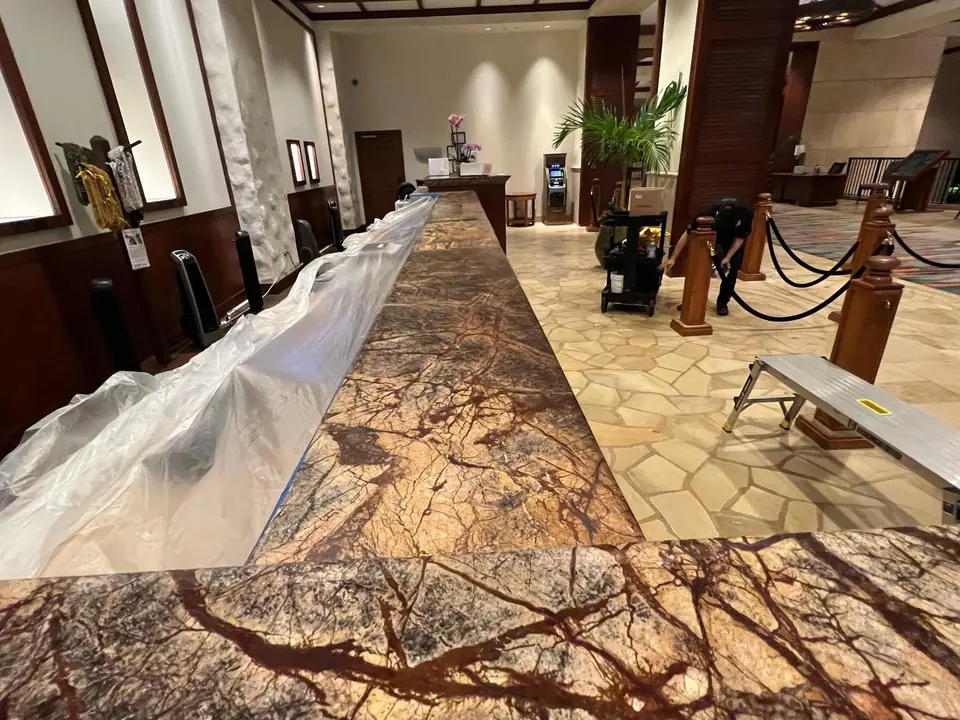
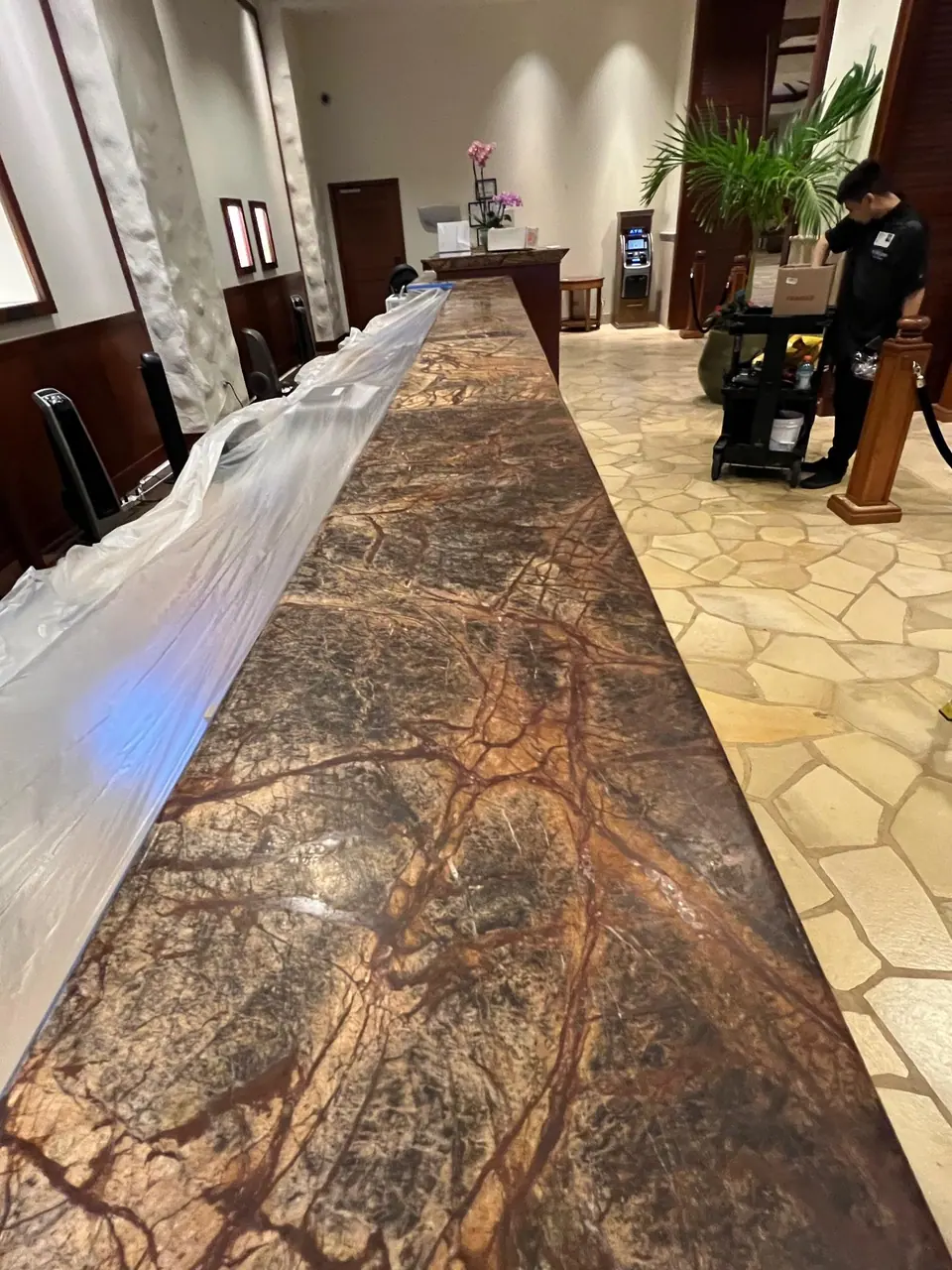
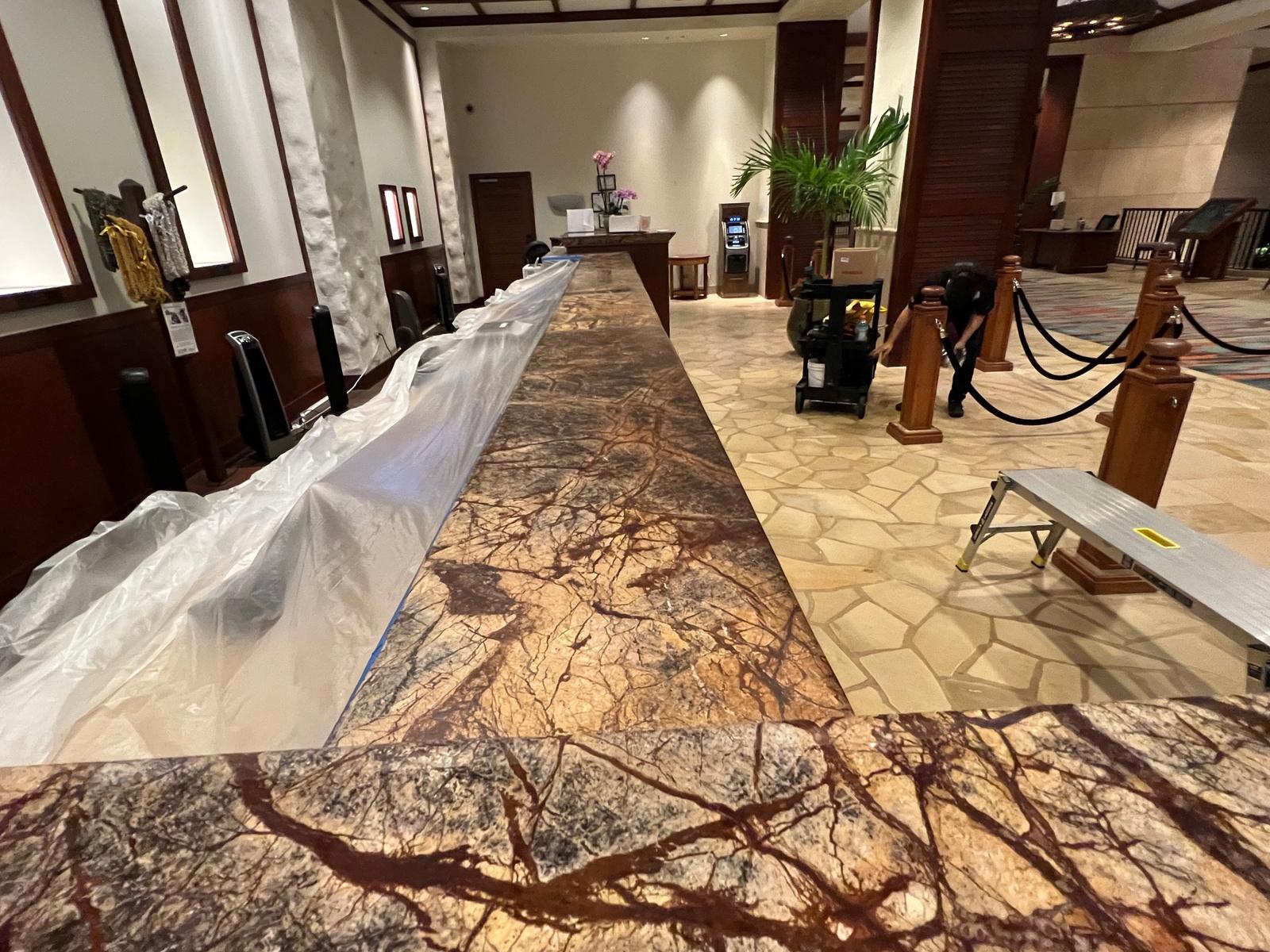
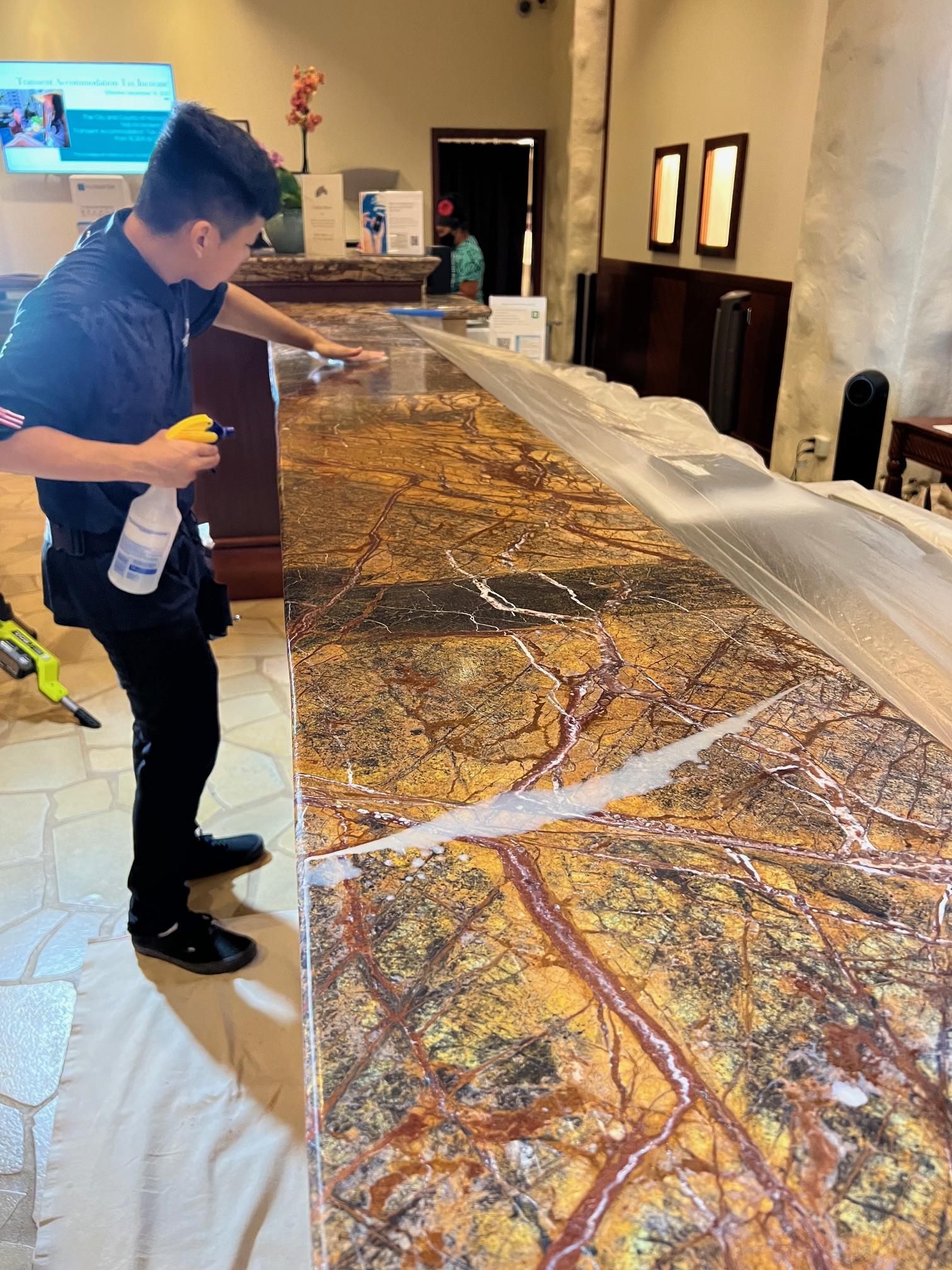
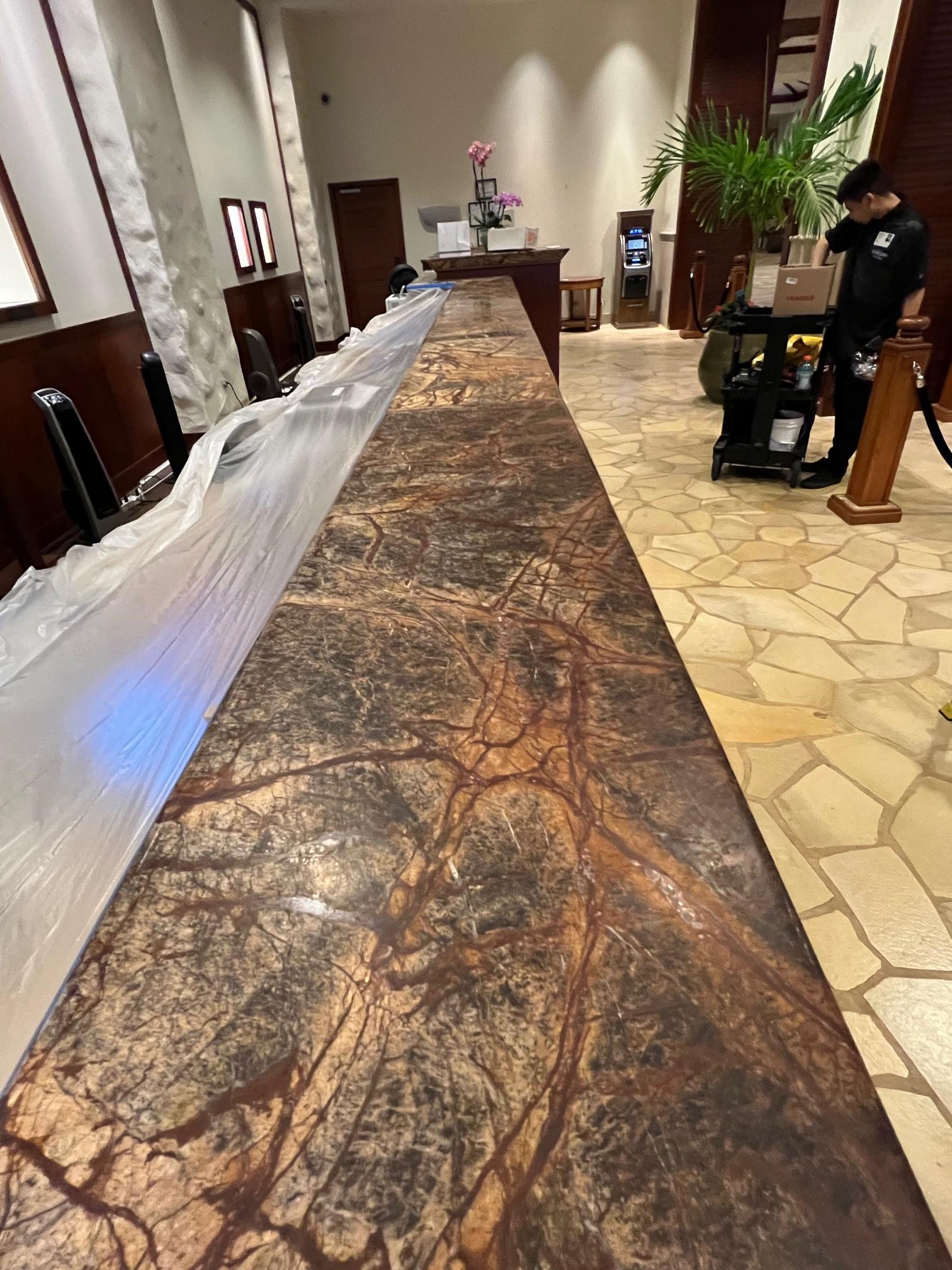
Marriott's resort at Ko Olina sits on the leeward corner of Oahu, roughly twenty miles west of Honolulu, on a piece of coast built around four sheltered lagoons. Our photographs are from the main lobby — the tall glazed arrival hall that every guest walks through on the way in and the way out.
What that glass is up against
Ko Olina is the dry side of the island. The Waianae range stands between it and the north-east trades, so the wind arrives thinned out and the cloud that piles up over the windward valleys largely never gets there. The practical result is more cloudless hours than almost anywhere else on Oahu, and an afternoon sun that swings west and drops low over open water instead of being cut off by a ridge.
A low sun is the hard case for a lobby. Overhangs and deep soffits are designed for a high sun; at four in the afternoon the light comes in almost horizontally, under the shading, and then arrives a second time off the lagoon. Guests check in facing it. Front-desk staff sit in it all day. And because the glazing runs floor to ceiling across a double-height space, the solar load lands in a volume the air handling has to condition in full while the entrance doors cycle open every few seconds.
Then there is the slow damage. Hawaii sits at twenty-one degrees north and the UV index runs at eleven or above for most of the year. Lobby joinery, upholstery, rugs and artwork are precisely the materials that keep a record of that. External shading would help, but bolting hardware to an oceanfront elevation in salt air becomes its own maintenance line.
What window film does about it
Roughly half the energy in sunlight is not light at all. It is near infrared — invisible, and the reason a glazed lobby feels hot even when the air in it is cool. A spectrally selective film bonded to the inside face of the glass reflects and absorbs most of that infrared band while passing the visible part, so total solar energy rejection rises sharply without the lobby going dim or the glass reading as a mirror from the porte-cochère.
It also removes effectively all of the ultraviolet, which is the single largest driver of fading. We would rather be straight about the limits than oversell it: heat and visible light fade fabrics as well, so film slows fading substantially, it does not abolish it. Nor does it touch heat conducted through the frames, or rescue a space that is simply short of cooling capacity. What it removes is the solar gain, which is usually the part nobody has addressed.
If you look after a resort, a hotel or a clubhouse with a glass frontage like this one, we will come and look at it and tell you what film will and will not fix. See more of our commercial work, or request a quote.
TESTIMONIALS
What People Say

We at the waikiki shopping plaza and waikiki business plaza have used or recommended Ace Glass Tinting on eight (8) different jobs in the last few years. Our jobs ranged from small two windows (36 sq. ft.) to a very difficult...
This letter is to thank you for the great job you did on our windows and doors.
It is so wonderful, we can already tell the difference in temperature...
Thank you very much for your glass tinting services for installation of the Huper Optik 40 ceramic film on our meeting rooms (Rooms 516 & 517). This film has improved the quality of our meeting rooms by reducing the heat....
Ace Tinting tinted Paradise Cruise offices on the 6th and 7th floors of Aloha Tower and on the Star of Honolulu (1500 passenger Dinner Cruise Ship). The tinting significantly reduced heat and glare in the interior spaces....
Get a Free Quote
Need More Information?
Get a free quote
Tell us the glass you want covered and Keith will call you back to arrange a time to measure it.
Residential film from $300
Priced per square foot of glass. No charge
for the estimate.
Prefer to talk? (808) 551-5500, Mon – Sat, 8:30am – 6:00pm. Sunday closed.