Moana Pacific - 1288 Kapiolani Blvd. Honolulu, HI 96814
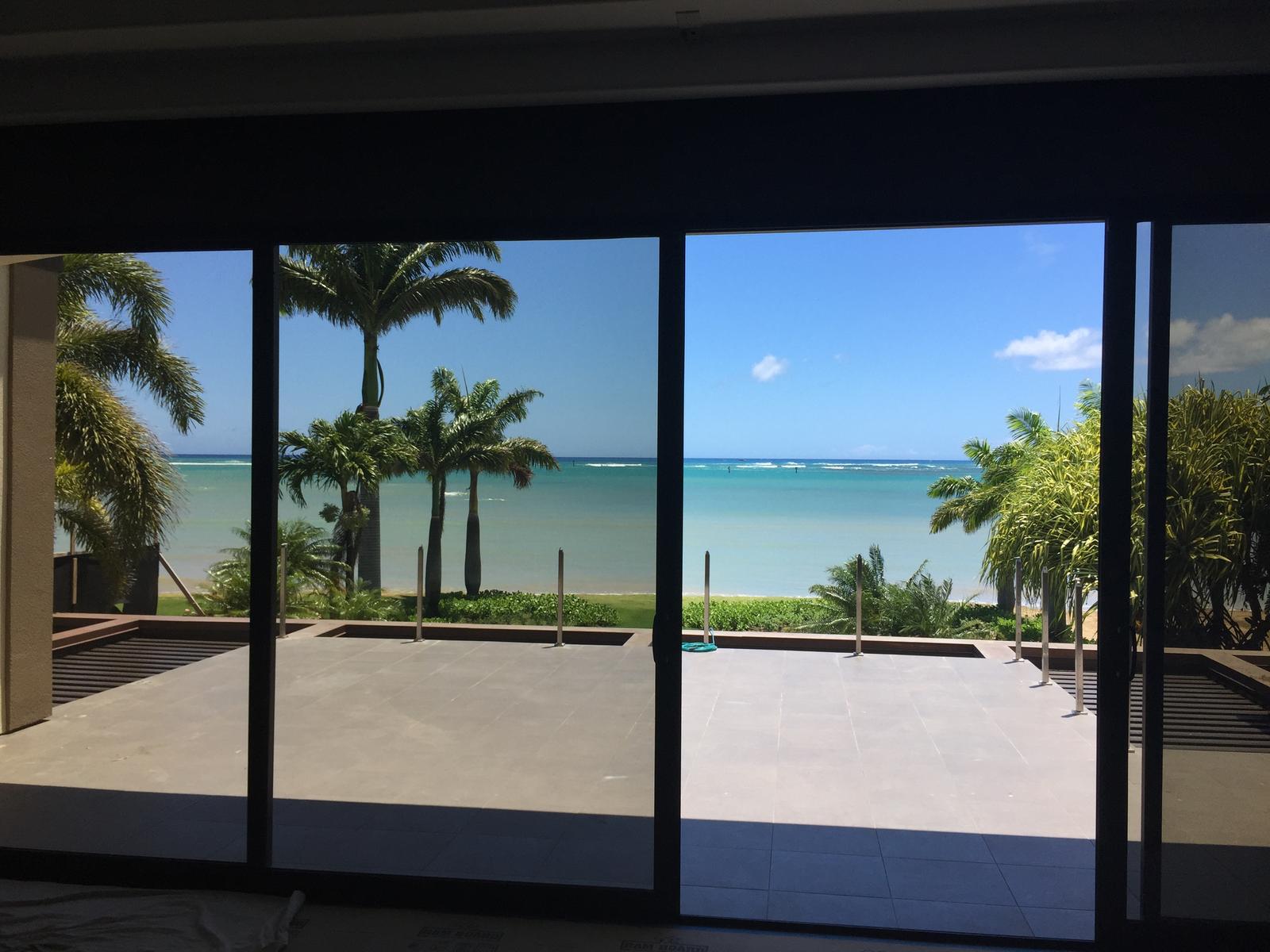
The building
Moana Pacific is a pair of residential towers on Kapiolani Boulevard in Kakaako, one block inland from Ala Moana Center, with units glazed to the floor on all four faces.
Being a block back from the water is not the relief it sounds like
Kakaako is now a dense block of towers, and the second thing that happens after a new one goes up is that its glass starts putting sun into your windows at times of day when the sun itself is nowhere near your elevation. Reflected solar gain off a neighboring curtain wall is real, it is significant, and it is badly understood: it arrives at angles fixed shading was never drawn for, it moves through the year, and it changes whenever something new is built. A pair of towers also reflects onto itself.
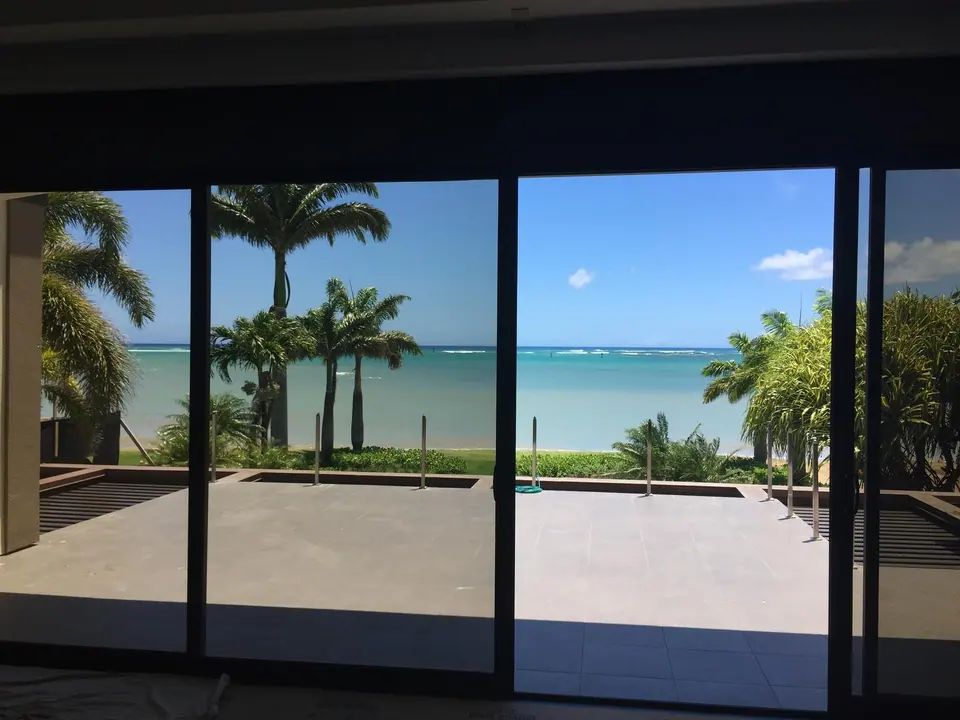
The direct sun is still there as well. The mauka units take the morning over the Koolau; the makai units take the afternoon and, through the gaps between the buildings in front, a low sun off the water at the end of it.
Then there is the part people notice at night without understanding it. A high-rise unit is a concrete slab and a lot of glass, both of which absorb heat all day and release it after dark. The air conditioning is still removing the afternoon at ten in the evening, which is why the bill in a glazed condo does not look like the bill in a house of the same floor area.
What window film does about it
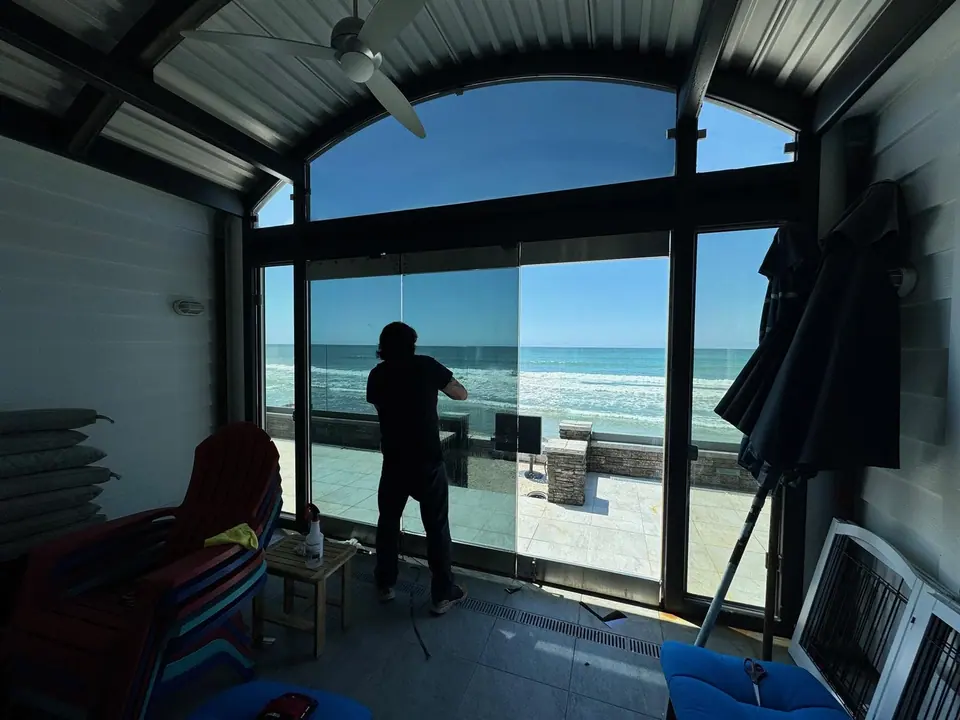
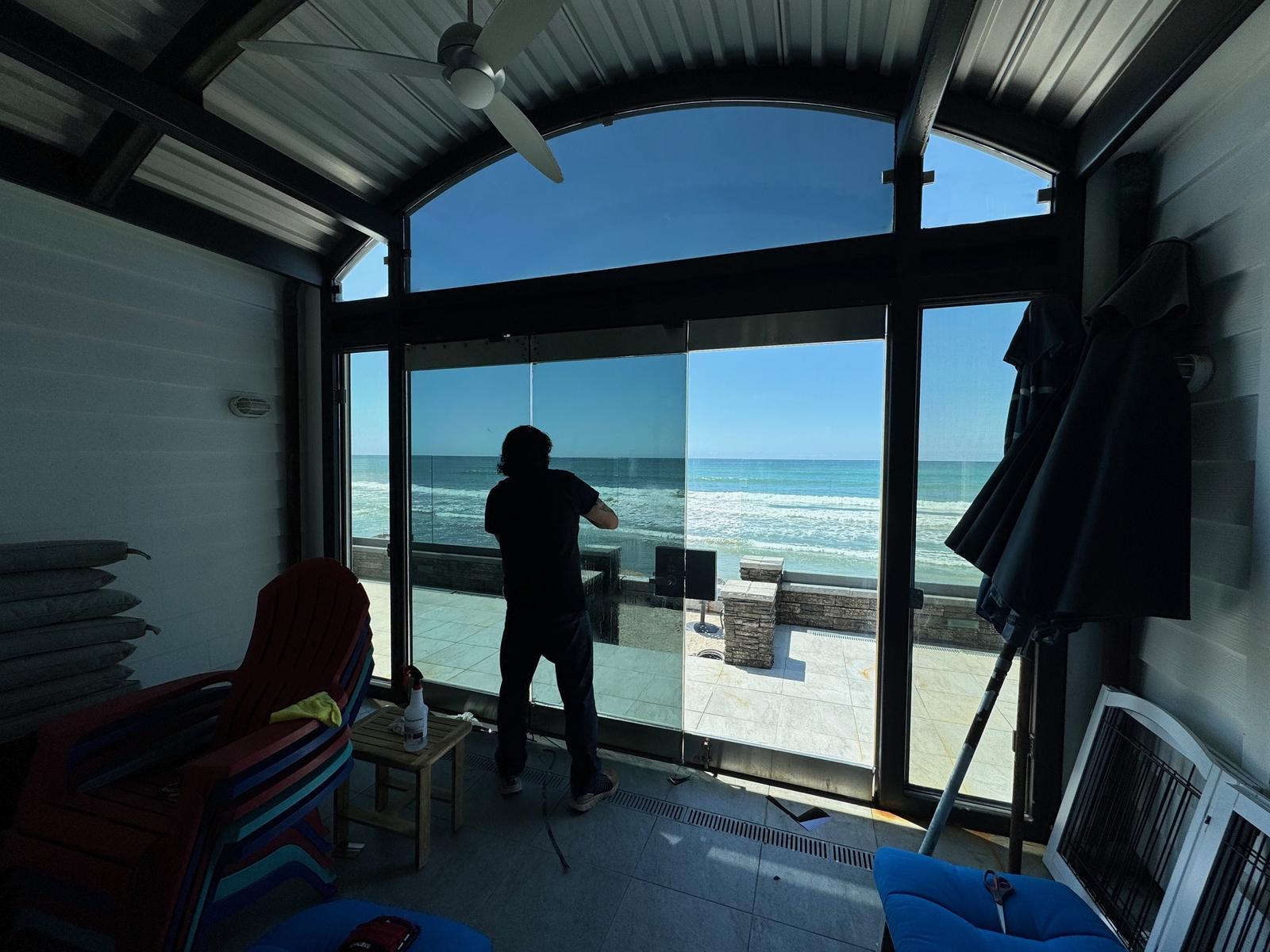
Cutting the solar gain cuts the peak, and the peak is what decides whether a small split system in a condominium can keep up at all. A spectrally selective film removes most of the infrared and effectively all of the ultraviolet while keeping the glass clear enough that the view is unaffected, and it reduces the amount of heat the structure stores during the day, which is what shortens the evening run time.
On glare, it does what a blind does without closing the window: it brings the brightness of a reflective neighbor down to something you can sit next to. It is worth being clear that it reduces the energy and the brightness of that reflection — it does not make the reflection go away, and no film addresses noise from the boulevard.
In a building with an association there is a process question as well as a technical one. Most Honolulu towers require that anything applied to the glazing be a single approved specification, so that the elevation reads as one surface and no unit stands out. That is worth establishing before an owner buys film rather than after, and it is usually the reason a board ends up specifying a product building-wide instead of handling a stream of individual requests. We are happy to talk to a board directly and put the same specification on every unit that wants it.
We work throughout Kakaako, on single units and whole towers. See our residential work or request a quote.
TESTIMONIALS
What People Say

We at the waikiki shopping plaza and waikiki business plaza have used or recommended Ace Glass Tinting on eight (8) different jobs in the last few years. Our jobs ranged from small two windows (36 sq. ft.) to a very difficult...
This letter is to thank you for the great job you did on our windows and doors.
It is so wonderful, we can already tell the difference in temperature...
Thank you very much for your glass tinting services for installation of the Huper Optik 40 ceramic film on our meeting rooms (Rooms 516 & 517). This film has improved the quality of our meeting rooms by reducing the heat....
Ace Tinting tinted Paradise Cruise offices on the 6th and 7th floors of Aloha Tower and on the Star of Honolulu (1500 passenger Dinner Cruise Ship). The tinting significantly reduced heat and glare in the interior spaces....
Get a Free Quote
Need More Information?
Get a free quote
Tell us the glass you want covered and Keith will call you back to arrange a time to measure it.
Residential film from $300
Priced per square foot of glass. No charge
for the estimate.
Prefer to talk? (808) 551-5500, Mon – Sat, 8:30am – 6:00pm. Sunday closed.